
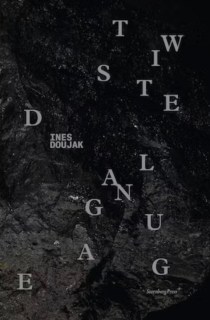
Twisted Language
Ines Doujak. Twisted LanguageEdited by Ines DoujakForeword by How & for Whom/WHW What176 pp., 7 x 10 in, 55 color illus., 15 b&w illus.HardcoverISBN 9781915609328Published in 2024Published by Sternberg Press A close examination of the realities of the current economic,
Twisted Language
Ines Doujak. Twisted LanguageEdited by Ines DoujakForeword by How & for Whom/WHW What176 pp., 7 x 10 in, 55 color illus., 15 b&w illus.HardcoverISBN 9781915609328Published in 2024Published by Sternberg Press A close examination of the realities of the current economic,
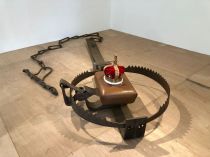
Perulangan (2022)
[loud, short] Bam! [startled] Agh! [super loud, with echoes] Bam!!! [shocked] Ahh! [nothing] … [perturbed] Ugh [moderate] Bang [gasped] … [super loud, long, long echoes] BAM!!! [shuddered] … [nothing] … [still shuddered] Ah [small echoes from afar] bang … bang
Perulangan (2022)
[loud, short] Bam! [startled] Agh! [super loud, with echoes] Bam!!! [shocked] Ahh! [nothing] … [perturbed] Ugh [moderate] Bang [gasped] … [super loud, long, long echoes] BAM!!! [shuddered] … [nothing] … [still shuddered] Ah [small echoes from afar] bang … bang
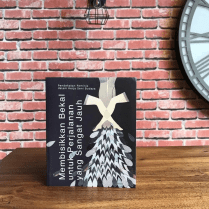
ber317an*
Abstrak Tamarra tertarik untuk menelusuri sejarah waria di Indonesia, terutama untuk mengumpulkan kisah-kisah dan cara-cara bertahan hidup, menavigasi hubungan pertetanggaan, dan bagaimana ragam lingkungan sosial memosisikan mereka. Tamarra memulai penelusuran ini dengan mendatangi komunitas Bissu di Sulawesi Selatan (2016, 2018,
ber317an*
Abstrak Tamarra tertarik untuk menelusuri sejarah waria di Indonesia, terutama untuk mengumpulkan kisah-kisah dan cara-cara bertahan hidup, menavigasi hubungan pertetanggaan, dan bagaimana ragam lingkungan sosial memosisikan mereka. Tamarra memulai penelusuran ini dengan mendatangi komunitas Bissu di Sulawesi Selatan (2016, 2018,

Jakarta Biennale 2021 ESOK
Excerpts ESOK is a hope, a shared hope; it is a prayer for all humans to be gratified instead of being repressed or tortured. We are all entangled in histories, personal or otherwise, in which human rights issues play a
Jakarta Biennale 2021 ESOK
Excerpts ESOK is a hope, a shared hope; it is a prayer for all humans to be gratified instead of being repressed or tortured. We are all entangled in histories, personal or otherwise, in which human rights issues play a
ǝlɐuuǝᴉq sɐ ǝɯɐs ǝɥʇ ǝq ʇouuɐɔ lɐuᴉq: Might the Exhibition Be a Festival?
Excerpts BINAL did indeed differentiate itself from the “institutionalising aesthetics” of the official biennale, playing up its “wildness”—where the word binal is translatable as “wild”, “rebellious”, “naughty”.[8] The proposal document for BINAL notes how the biennale’s “institutionalising” was enforced through its selection process
ǝlɐuuǝᴉq sɐ ǝɯɐs ǝɥʇ ǝq ʇouuɐɔ lɐuᴉq: Might the Exhibition Be a Festival?
Excerpts BINAL did indeed differentiate itself from the “institutionalising aesthetics” of the official biennale, playing up its “wildness”—where the word binal is translatable as “wild”, “rebellious”, “naughty”.[8] The proposal document for BINAL notes how the biennale’s “institutionalising” was enforced through its selection process

Feasting the volcano and cheers to the abundance of scales
Episōdo 03Chasing the Scent A transcontinental tributary convened by Kabelo Malatsie, Michelle Wong, and Lantian Xie, investigates and performs the aporias arising from claims to equality, made with bodies, words, sounds, costumes, instruments, and with shifting forums. This draws from
Feasting the volcano and cheers to the abundance of scales
Episōdo 03Chasing the Scent A transcontinental tributary convened by Kabelo Malatsie, Michelle Wong, and Lantian Xie, investigates and performs the aporias arising from claims to equality, made with bodies, words, sounds, costumes, instruments, and with shifting forums. This draws from
Consequential Privileges of the Social Artists: Meandering through the Practices of Siti Adiyati Subangun, Semsar Siahaan and Moelyono
Abstract How do artists work with people? How do artists work with many people? What do the people who work with these artists think about the work? Does the fact that they are artists matter to these people? What makes
Consequential Privileges of the Social Artists: Meandering through the Practices of Siti Adiyati Subangun, Semsar Siahaan and Moelyono
Abstract How do artists work with people? How do artists work with many people? What do the people who work with these artists think about the work? Does the fact that they are artists matter to these people? What makes

Mischiefs and festivities: How to body-build?
“The way our society works does not leave us space nor time to move alone. So, most likely things are done together. Some people call it DIWO (do it with others). But, these terms are unlike Coca-Cola, which is definitely
Mischiefs and festivities: How to body-build?
“The way our society works does not leave us space nor time to move alone. So, most likely things are done together. Some people call it DIWO (do it with others). But, these terms are unlike Coca-Cola, which is definitely

#memulaisajasulit
Membaca kedua artikel di atas mengingatkan saya akan pertanyaan yang saya unggah beberapa bulan lalu. Waktu itu, karena melihat Herd and Scene (di India), saya mempertanyakan apa yang bisa kita lakukan dalam lingkungan pekerjaan kita, dunia seni dan budaya kita
#memulaisajasulit
Membaca kedua artikel di atas mengingatkan saya akan pertanyaan yang saya unggah beberapa bulan lalu. Waktu itu, karena melihat Herd and Scene (di India), saya mempertanyakan apa yang bisa kita lakukan dalam lingkungan pekerjaan kita, dunia seni dan budaya kita

Collecting Entanglements and Embodied Histories
The conference seeks to open up new perspectives on storytelling, narrativisations of history and their embodiment in performative arts and practices in Southeast Asia. Central questions are how, in very different ways, these practices offer new potentials to be presented,
Collecting Entanglements and Embodied Histories
The conference seeks to open up new perspectives on storytelling, narrativisations of history and their embodiment in performative arts and practices in Southeast Asia. Central questions are how, in very different ways, these practices offer new potentials to be presented,
 グレイス・サンボフ